
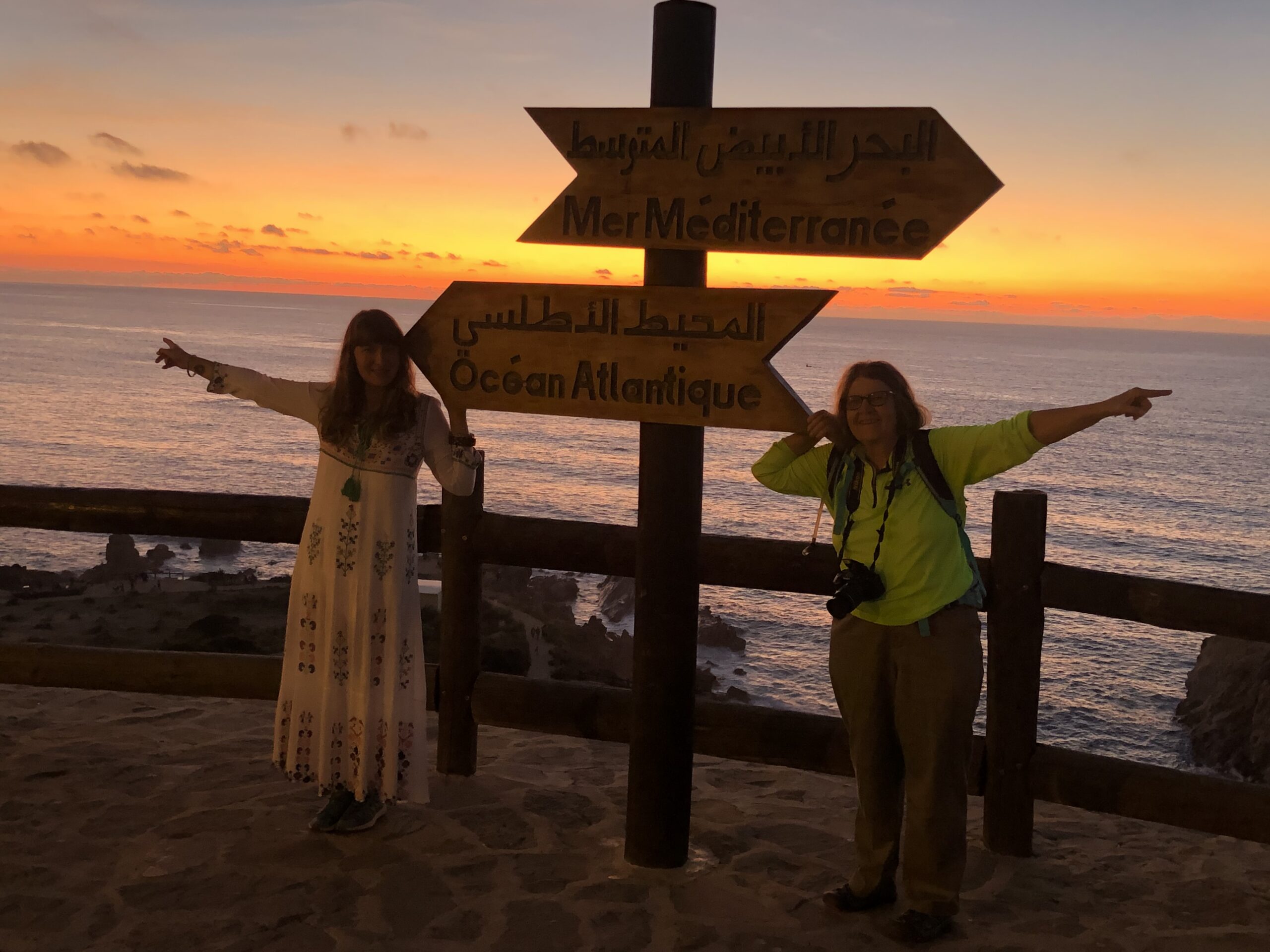
Welcome to Last Name Unknown, where I delve into the fascinating tales of my ancestors from around the world. Through personal narratives and thorough research, I explore how their experiences shape my identity and connect to broader themes of history and the multi-ethnic heritage of modern America. Join me on this journey of discovery and reflection as we uncover the mysteries of our past together…
My Journey into Genealogy
I started researching my family tree in middle school when I was assigned a class project to document three generations of my family history.

Being a precocious child, I got lost in an overachiever rabbit hole, made a 98 page book, and went back 20 generations to King Edward III of England instead. Needless to say I got an A+++ on my project and this started my lifelong interest in genealogy! This also should have been one of many signs of undiagnosed ADHD, but it was the 1980s so I got put in the “gifted weird girls” class instead and the rest is history.
Fun fact: most people with predominantly British ancestry can trace their lineage back to Edward III. I can even do it through multiple different lines via John of Gaunt on both my maternal and paternal sides. It’s really not as special as it sounds, but you can still think of me as a princess if you want.
Full disclosure, I have several genealogists, historians, anthropologists, archivists, and librarians in my family so I had a head start on parts of my tree. If you’re wondering if an interest in these fields is genetic, signs point to yes (see also: hereditary neurodiversity).
I continued a casual interest in genealogy into adulthood, mostly keeping up with my paternal aunt’s anglophile discoveries about our British and European royal ancestors and reading profiles of historical figures on Wikipedia while watching historical period dramas. My son would jokingly ask if we’re related to whatever characters were on the screen, to which the answer was usually an enthusiastic “well actually….” Now as a current History major himself, he still rolls his eyes and doubts we’re related to any of these historical figures, but is slightly more interested in some of the stories.
Introducing Genetic Genealogy

My interest really picked up last year when my mom took a DNA test on Ancestry.com, mostly to see if she could find any more surprise siblings (more on that in a future post). She expected her ethnicity would look like a typical mostly Scots-Irish Presbyterian with deep Colonial American roots. But as these things tend to go, her results had some unexpected non-European ethnicity, the 1% Maritime Southeast Asia (MSEA), that got us wondering who and where it came from! Needless to say Mom had absolutely no idea, but we knew it was somewhere on her maternal side.
Now 1% may seem like an insignificant amount to you and can occasionally reflect “statistical noise”, but Ancestry’s ethnicity estimates focus primarily on recent ancestors, so 1% of your ethnicity can reflect a single ancestral line introduced into your lineage starting around 5-8 generations back or roughly 1700-1850.
Thanks to those previous generations of diligent record keepers, I have what I assumed to be a fairly accurate understanding of who those ancestors were, where they came from, and in some cases what they look like. But we all know sometimes somebody’s daddy isn’t who their mama said he was and sometimes people falsify records in order to protect family secrets or, as is often the case in US history, in order to pass as white in a highly racialized and discriminatory social system.
My First Clues
I’ve since learned unexpected Maritime Southeast Asian results can mean a number of different things, most commonly an ancestor from Indonesia, Malaysia, Singapore, Papua New Guinea, the Aboriginal peoples of Australia, and also the East African island of Madagascar. In some cases this can also reflect miscategorized Native American ancestry that’s been diluted over many generations (more on that in future posts). That’s a fairly broad cross section of the world, in particular in the context of US history from 1700-1850. Genetic genealogy and ethnicity estimates are also an evolving science and there’s a lot we’re still learning about how to interpret and use these consumer tests.
As I dug into the data on Ancestry to attempt to solve this mystery, I narrowed it down to somewhere in the ancestors of my great great grandparents Dialtha Julina Howerton and Daniel Boone Burd, based on our other DNA matches who share this same 1% MSEA ethnicity. I have a few family photos of these ancestors and their extended families so I started there. Below is Julina with her siblings and parents who were born in Rhea and Sevier Counties in Tennessee in the 1820s and both moved with their parents and extended families to settle the community of Long Lane, Missouri in 1839. No one stood out as obviously of Southeast Asian ancestry to me but they do have a bit of a unique look. My mom says they just look like hard working, humble subsistence farmers who spent a lot of time in the sun and might be missing some teeth from their frontier diet.

Turning to the Burd family, their trail gets lost somewhere in East Tennessee with what I lovingly call my frankenancestor and 5th great-grandfather John Bird (aka John Carter Amos Bird or John Carter Byrd) who is a mashup of multiple different people with similar names possibly residing in Greene County, Tennessee around 1780, the most prominent and commonly attributed one having no recorded descendants. This was just the first mystery I stumbled on, and needless to say I was hooked!
The Plot Thickens
In order to dig deeper, I clearly needed to learn more about genetic genealogy, ethnicity calculators, and ancient human migration patterns. I also started digging into more history and traditional genealogy topics related to the European colonization of the Americas, Native American tribal history and the family impact of colonization as well as the Indian Removal act of 1830, the transatlantic slave trade, the Manilla Galleon trade, shifting US census racial categorizations, and family naming practices. I’m also learning about the complex communities of tri-racial isolates of colonial America with multi-generational mixed European, free Black, and Native American ancestry; such as Louisiana Creoles, and the “mysterious” Melungeons who can be found in a variety of Appalachian communities… including Rhea, Hawkins, and Greene Counties where several of my ancestors migrated from.
As I kept digging and started experimenting with different calculators on a free genetic genealogy site GEDmatch and further testing on 23andMe, I discovered my family’s ethnicity includes much more complexity than just what you see in the results from Ancestry. I also uncovered clues to additional Indigenous American, North African and Mediterranean, SubSaharan African, Southwest Asian, and other Oceanic ancestry across my entire maternal side. Turns out my ancestors come from across the entire globe, maybe yours do too, and I can’t wait to tell you all about the hows and whys of it!

Telling My Story
I hope you’ll join me in this journey as I dig further into what I’ve uncovered and what else I have to learn. Along the way I’ll share reviews, tips, and tutorials for each of the genetic genealogy platforms and tools (I’ve tried them all) and will get into the details of how and why different ethnicity calculators show different results.
I’ll also share my bibliography of sources and book reviews about US, European, Indigenous American, African, and Asian history and critical race theory; film, fiction, music, and art; genetic research; archeology and anthropology journals; and some ancestral healing witches and mediums for a more spiritual perspective.
And I’ll share tips on researching your own family history and understanding the stories each person’s life can tell within the context of history and their environment. We’ll also take a look at how my family history shapes my own identity and life today.
And because my list of hobbies reflects the variety of interests bouncing around in my brain, you might even get some bonus content on watercolors, candle making, hula hoops, or whatever random fun sidetracks me from my mission!
Why Family History Matters
As a lifelong anti-racist activist raised in a family committed to social justice, this work has helped me to not only reconsider what race, ethnicity, and identity actually looks like from a historical perspective and as a social construct, but also to acknowledge how complex it often is within each individual human. Many of these mixed communities such as Creoles and Melungeons reject the idea of race or a racial binary entirely.
While I come from a predominantly white, mostly British Colonial American lineage in modern history, I also have many thousands of ancestors from all over the entire globe spanning the entirety of human existence. They are all equally my ancestors, but I’m especially interested in learning about those whose stories often go untold, whose names are unknown, so I can honor their life experiences and how they shape who we are today.
As is common in early US history, I’ve discovered some of my ancestors include enslavers, colonizers, and other horrifying and brutal historical figures I’m not proud of. I’ve also found even more ancestors who persevered through immense struggles or consciously rejected the institution of slavery and chose to be better than those they came from. Their legacy and choices persist in myself and my family today.
My goal with my research and this blog is to honor those whose enduring spirit thrives in me today, and to use what I’ve learned to help others who were impacted by my ancestors and our shared history to learn where you come from too.
Spoiler alert: I still have no idea where this Maritime Southeast Asian ancestry came from or what it means, but I’ve found even more clues and I haven’t given up the search. I hope you’ll stick around for whenever I find out….
-
My great great grandmother Dialtha Julina (Howerton) Burd is in the middle of the back row. Her siblings are in the same row, and her parents, George Adkins Howerton and Nancy Frances Randles Howerton, are in front of her. Late 1800s Dallas County, Missouri
Leave a Reply
You must be logged in to post a comment.