
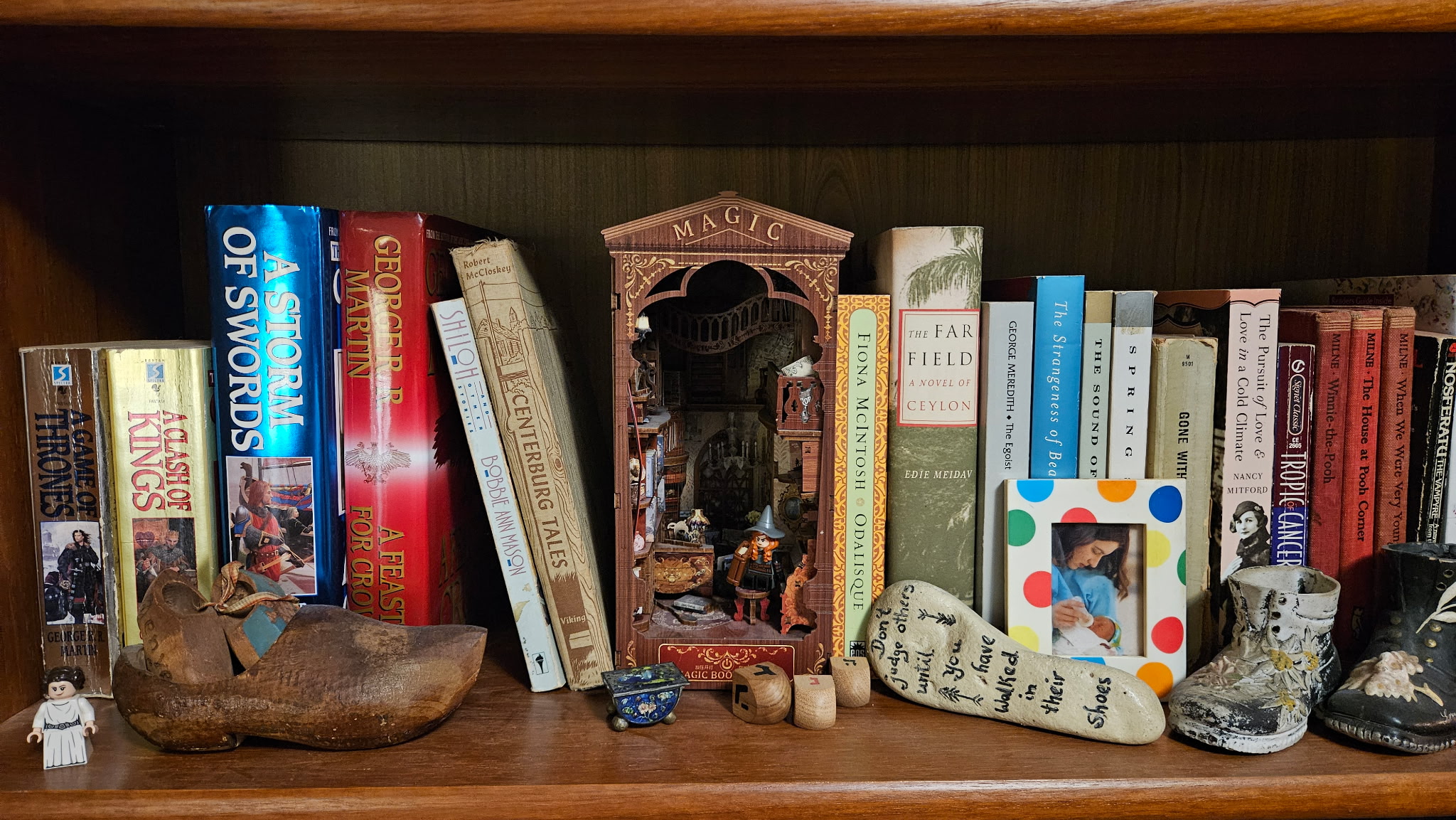

My friends call me the Book Pimp because I’m often recommending books on whatever topic we’re discussing, so naturally I have some suggestions for books to decolonize your genealogy bookshelf. As I research the lives of my ancestors, I find it helpful to learn about the time and place they lived in to better understand their lives as well as the lives of those they impacted. When researching different aspects of American history in particular, it’s especially important to me that I center voices and experiences of Native Americans, African Americans, women, and other minorities, as so much of American history is written by and told from the Eurocentric perspective of white men.
History is not just a series of names, dates, and places, but also stories of living human experiences, thoughts, and feelings. As I read these books, I try to imagine what role my ancestors might have played in the stories that shape our history.
I also prefer to focus my reading on well researched scholarly works with narrative writing styles, so these should be approachable for casual readers and not just academics.
Please join me in boycotting Amazon as a means of resistance against the rising billionaire corporate oligarchy in the US. You can borrow these books for free from your local library system via Libby.
If you’d like to buy a copy for your very own home library, please support local independent booksellers by shopping for these titles on Bookshop.org. A portion of your purchase will also help fund my hosting fees, because book pimpin’ ain’t easy!
Decolonizing History
From the colonial era to present day.
African American History

Before the Mayflower: A History of the Negro in America, 1619-1962 by Lerone Bennett Jr.
A classic of African American history by the senior editor of Ebony magazine. First published in 1964 so the language is a bit dated but the content is worth it. In addition to profiles on key figures, he covers the history starting with pre-colonial Africa to the Civil Rights Movement. The portraits of key figures and pioneers were inspiring, and the section on miscegenation was especially relevant to genealogy research.

The 1619 Project by Nikole Hannah-Jones, The New York Times Magazine
A series of essays on African American history with emphasis on slavery and Reconstruction. The audiobook is especially good, interspersed with poetry and prose. Especially interesting was the essay on how the Reconstruction Era’s newly elected Black representatives in the South funded public school systems that ultimately benefited poor whites as well, and how the racist backlash of underfunding public schools continues to cripple Southern states today. Waters McIntosh, who spent his childhood enslaved in South Carolina said “It was the poor white man who was freed by the war, not the Negroes.” Learn more about how Black freedom benefited poor whites here.

From Here to Equality by William A Darity Jr, Andrea Kirsten Mullen
Reading 1619 got me thinking a lot more about reparations and the debt we still owe Black Americans as a nation. This book makes the case with a thorough history lesson. A must read, especially if you’re thinking your white Yankee ancestors are off the hook for complicity in slavery. Spoiler alert: they’re not.

Memories of Madagascar and Slavery in the Black Atlantic by Wendy Wilson-Fall
This one comes highly recommended by numerous friends in genealogy circles with Malagasy ancestors. I just got my hands on a copy and hope it helps me clarify some things about my Maritime Southeast Asian ancestry mystery. Follows the history of enslaved Malagasy and their descendants as well as the making of Malagasy ethnic identity within Black American identity.
Native American History

The Rediscovery of America: Native Peoples and the Unmaking of U.S. History by Ned Blackhawk
A look at American history from an Indigenous perspective from colonial era to present day. The author is Western Shoshone and a history professor at Yale. Compares differences between colonial impact in Spanish, Portuguese, English, and French colonies as well. The last chapter on tribal termination and child removal is heartbreaking and especially relevant to modern genealogy research. I was hoping for a bit more pre-colonial history of Eastern Woodlands tribes though so I’m still looking for Indigenous sources on that topic. If you have any recommendations, please share them below!

We Had a Little Real Estate Problem: The Unheralded Story of Native Americans & Comedy by Kliph Nesteroff
History of Native American comedy and how Native American folklore, culture, and comedians have influenced American comedy traditions as a whole, as well as Native American representation in broader American popular culture and myth making. Highlights wild west shows, pow wow announcers, and popular figures such as Charlie Hill and Will Rogers and numerous modern comedians. I grew up listening to a lot of vintage comedy and reading Navajo and Hopi folktales as a child so I read this for the nostalgia, but the history lesson was a pleasant surprise!

1491: New Revelations of the Americas Before Columbus by Charles C. Mann
I was hoping for pre-colonial Native American history but this was more archeology and environmental focused instead, and to my knowledge not by an Indigenous author. It did have some interesting insights though so worth the read if you’re especially interested in environmental archeology. More focused on Aztec civilization so not as relevant to my specific regional interests. He has a follow up book 1493 which takes a similar approach to post-Columbian global impact.
Race and Identity in American History
For those researching tri-racial isolate, Melungeon, and other mixed race ancestors in particular in the Southeastern region.

An Afro-Indigenous History of the United States by Kyle T. Mays
I haven’t read this yet but it’s been recommended by several people and is up soon in my TBR list. Written by an Afro-Indigenous Saginaw Chippewa scholar at UCLA. Given the topic I imagine it will have more history relevant to the South and Eastern Woodlands tribes.

White Trash: The 400-Year Untold History of Class in America by Nancy Isenberg:
An in depth exploration of class, race, and eugenics in the US from colonial era to present day. Primarily focused on the South, so highly recommended for anyone researching Southern ancestors, especially Tidewater, Melungeon, and Appalachian communities. Includes a section on Pocahontas mythmaking and “Native American princess” family lore.

That the Blood Stay Pure: African Americans, Native Americans, and the Predicament of Race and Identity in Virginia by Arica L Coleman, Joseph F Jordan
This one has been highly recommended for research related to colonial Virginia ancestors, of which I have many, as well as how Virginia’s racial purity laws shaped racial identity historically and within Afro-Indigenous communities today. I have a copy on the way so stay tuned for an updated review.

The Melungeons: The Resurrection of a Proud People by N Brent Kennedy, Robyn Vaughan Kennedy
Considered the authoritative source on the history of Appalachian tri-racial isolate “Melungeon” communities. I have a copy on the way and hope it provides some clues for how my ancestors overlapped with, intermarried, and lived within these communities and how racial identity may have impacted their migration from colonial Virginia, across Appalachia, and into Missouri.
General American History
A variety of topics and eras relavent to my own family history and maybe yours too. I haven’t read all of these yet so I’ll report back with updated reviews as I knock them off the To Be Read pile.

A People’s History of the United States by Howard Zinn
A classic of US history from the perspective of everyday people, class conflict, and marginalized voices, with an emphasis on anti-capitalist and social justice topics. It’s really long and I’ve been reading it off and on for several decades so maybe one day I’ll even finish it. I recommend reading this with a critical lens as it’s written with a political bias, is geared towards a popular audience, romanticizes and flattens complex Indigenous and African cultures and history, and is not the most rigorous scholarly research.

The American Revolution and the Fate of the World by Richard Bell
I’m in the middle of this one now to better inform my series on my Revolutionary War ancestors and am enjoying the unique approach to this era as seen from a global perspective and impact beyond just North America and Europe, highlighting stories of women and minorities as well. The author is a British born, American trained historian so that ads a unique perspective. And he’s a professor at my alma mater so shout out to the University of Maryland history program!

Cults Like Us: Why Doomsday Thinking Drives America by Jane Borden
I’ve been fascinated by and studying the history of cults since I was a teenager learning about Charles Manson. It was thing for Gen Xers. I can’t explain it, but a history book on how Doomsday cults were instrumental to the founding of America was right up my alley. The opening chapter on Plymouth was an eye opener and really made me reflect on my Mayflower ancestors in a whole new light.

The Witches: Suspicion, Betrayal, and Hysteria in 1692 Salem by Stacy Schiff
I have about 30 ancestors in my extended family on my paternal side who were accused of witchcraft, including 4 direct ancestors across Salem, Andover, and Ipswich, and at least one accuser on my maternal side, so this one has been on my reading list for a while. I’m hoping to have a deep dive on my favorite branch of my tree ready in time for Spooky Season. This is a hefty tome and is supposed to be incredibly thorough and well researched so more to come in a few months…

In the Devil’s Snare: The Salem Witchcraft Crisis of 1692 by Mary Beth Norton
Another history of the Salem Witch Trials by a feminist historian with an emphasis on the context and impact of fear, trauma, and tensions between colonists and Native Americans within broader regional conflicts. I haven’t read this yet so it will be interesting to see if/how the author incorporates the Indigenous perspective into the narrative. I’ve also read reviews that the writing is a bit dry.

Witches, Wife Beaters, and Whores: Common Law and Common Folk in Early America by Elaine Forman Crane
Every family tree has a few folks who ran afoul of the law, so I’m hoping to find a few of mine in here along with a better understanding of early colonial legal system and common law. Also who doesn’t love a bit of alliteration in that title! The book focuses on reconstructing 6 specific trials so perhaps one of them relates to your family. I’m especially curious about the Bermuda witch trials, as one of my ancestors was a judge.

Devil Made Me Do It!: Crime And Punishment In Early New England by Juliet Haines Mofford
Another feature on crime and punishment, focusing on colonial New England. The book draws on on early court dockets, diaries, sermons, gaolers’ records, and other primary sources and looks like a relatively quick read.

Mutinous Women: How French Convicts Became Founding Mothers of the Gulf Coast by Joan Dejean
Featuring the fascinating story of my maternal 7th great grandmother Genevieve Bettemont and other “convict brides” who were falsely accused of sex crimes, imprisoned, and trafficked from France to colonial Louisiana on La Mutine in 1719 and how the survivors were instrumental in building the city of New Orleans. I just ordered this so stay tuned for a feature on her story.

A Brief History of Memphis by G Wayne Dowdy
I read this many years ago after realizing most of what I knew about my hometown was either about the Civil Rights Movement or the music history. If your family has deep roots in Memphis, this is a good overview of key events that shaped the city’s history, including the rivalry between Memphis and the state of Tennessee/Nashville.
World History and Cultural Anthropology
Branching out of US History and tracing my ancestors across the globe. I’ll add more to this list as I start to explore this history in more detail.

Kings and Queens of England and Scotland by Plantagenet Somerset Fry
For the Anglophiles in your family tree, this is a concise history of all the monarchs of England and Scotland with family trees, pictures, and timelines. If you have English ancestors, chances are you’re related to Edward III, King Alfred, Charlemagne, and probably descended from John of Gaunt in at least three different ways so this handy reference guide will help you keep track of them all. It’s also a convenient coffee table book if you like watching period piece shows about British history and Vikings. Not at all decolonizing, so this one is for the Queen in all of us.

Guns, Germs, and Steel: The Fates of Human Societies by Jared Diamond
Human history from an evolutionary biology perspective, considering how biodiversity and agriculture, disease, geography, climate, population size, and access to resources and weaponry impacted human migration, settlement, and colonization throughout the course of human history. A must read for anyone interested in human migration, sociology, and anthropology and how it varies across the globe.

The Dawn of Everything: A New History of Humanity by David Graeber, David Wengrow
A lengthy book about human history, archeology, and anthropology that challenges prevailing assumptions. It took a while to read but I really enjoyed the entire book and highly recommend it. A good counter to some of the bias in Guns, Germs, & Steel, with a focus on the variety in Indigenous societies and how they each evolved over time and in relationship with their unique environments as opposed to reducing Indigenous people to a monolith or a trope. I especially enjoyed the chapter on Indigenous American philosophers and their impact on the Enlightenment Era and reaction to European culture in the colonial era.

Sapiens: A Brief History of Humankind by Yuval Noah Harari
I recommend this with caution as it should be read through a critical lens, but it was useful from the standpoint of the history of human evolution and humanoid genetics, through insights from biology, anthropology, paleontology, and economics. It makes a lot of sweeping generalizations about human culture though.
Shop the whole reading list on Bookshop.org:
I’d also like to dive into some guides on researching family history, genealogy techniques, and genetic genealogy. What’s on your genealogy bookshelf? If you’ve read any of these books or have others to recommend, I’d love to hear your thoughts in the comments below!
Coming soon: Fact & Fiction – memoirs, biographies, and historical fiction that inspires me to think like an ancestor!
Leave a Reply
You must be logged in to post a comment.